
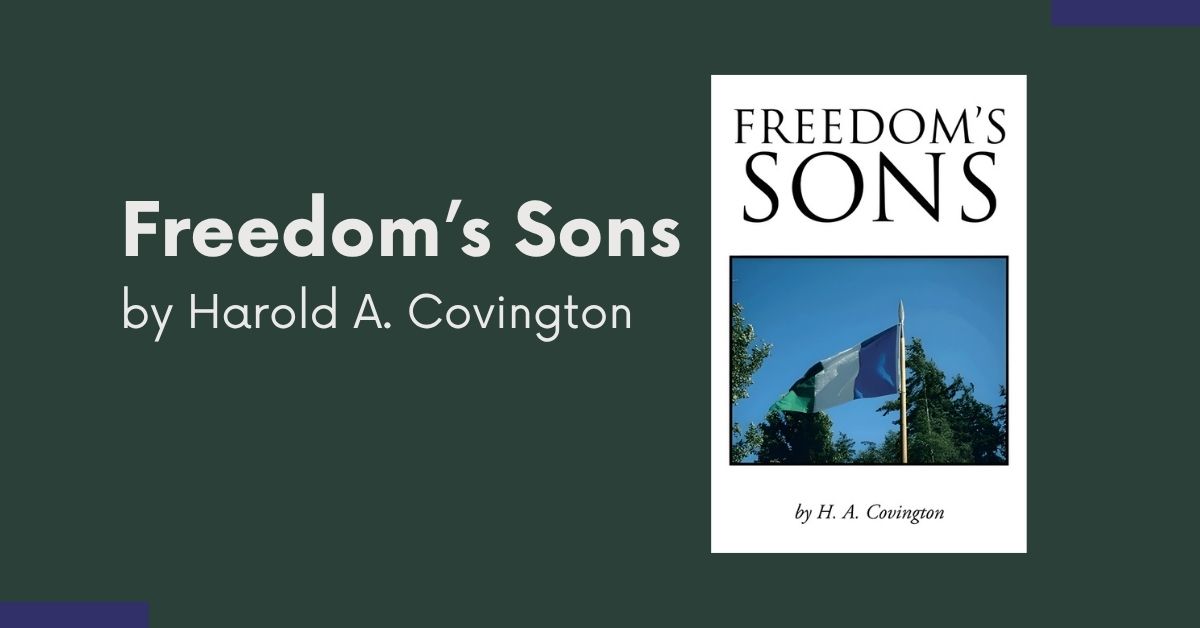
Freedom’s Sons by Harold A. Covington
Author: Harold A. CovingtonGenre: Fiction Pages: 756Year: 2012Categories:Adventure/Action Fiction Political-Fiction Sociology Tags:Action Adventure Community Building Group Dynamics Identity Ideology Leadership Political Fiction Radical Movements Resistance Separatism Speculative Fiction Strategy SummaryFreedom’s Sons is a political fiction novel that follows a group of activists working to establish an independent homeland through organized resistance and long-term strategy. The story explores themes of identity, loyalty, and conflict as the characters navigate internal divisions and external opposition while pursuing their goals.Read Extended AbstractFreedom’s Sons by Harold Covington is a political fiction novel that explores the formation and activities of a group committed to creating an independent homeland. The narrative follows the organization, strategy, and personal dynamics of the movement as its members confront social, political, and logistical challenges. Covington examines themes of loyalty, leadership, and community cohesion, illustrating how shared identity and purpose drive collective action. The novel delves into the tensions between idealism and pragmatism, showing the compromises, conflicts, and moral decisions involved in sustaining an ideological movement. Through character-driven storytelling, it portrays the interplay between personal ambition and group objectives, while highlighting the external pressures from opposition forces and broader societal structures. Freedom’s Sons combines speculative political thought with narrative fiction, offering insight into the organizational and psychological dimensions of radical political movements.Related BooksAnna Karenina by Leo TolstoyThe Clouds by AristophanesAesop’s Fables by AesopSeven Against Thebes by Aeschylus
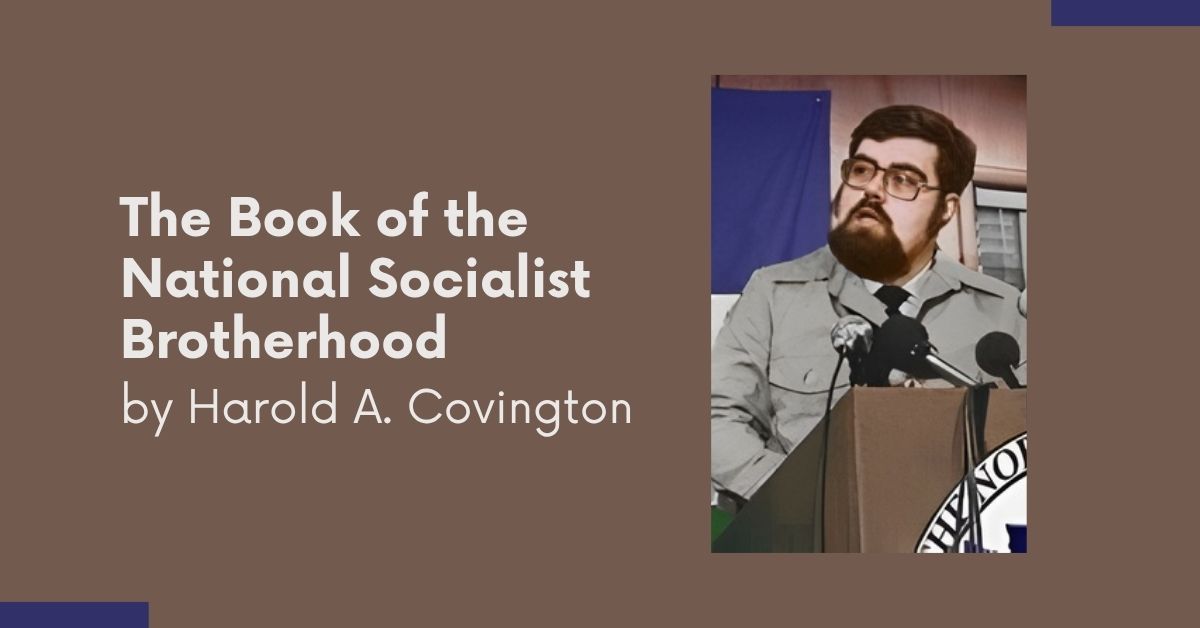
The Book of the National Socialist Brotherhood by Harold A. Covington
Author: Harold A. CovingtonGenre: Non-Fiction Pages: 36Year: 1999Categories:Non-fiction Politics & Current Affairs Tags:Community Building Extremist Literature Manifesto National Socialism Nonfiction Organizational Strategy Political Ideology Political Theory Separatism Social Theory SummaryThe Book of the National Socialist Brotherhood is a political and ideological work that outlines the structure, beliefs, and long-term objectives of a proposed separatist movement. It presents a framework for organization, strategy, and community-building centered on a shared identity, while reflecting the author’s broader worldview and political perspectives.Read Extended AbstractThe Book of the National Socialist Brotherhood by Harold Covington is a political and ideological work that outlines the structure, guiding principles, and long-term vision of a proposed separatist movement referred to as the “Brotherhood.” The text presents a conceptual framework for organizing a cohesive community based on shared identity, with an emphasis on discipline, hierarchy, and collective purpose. It describes how such a movement might recruit members, establish leadership structures, and maintain internal unity over time. The work also explores strategic considerations, including territorial ambitions, self-sufficiency, and methods of gradual expansion. Covington discusses the challenges of sustaining a community built around a controversial ideology, addressing issues such as loyalty, governance, economic organization, and external opposition. The narrative blends theoretical discussion with prescriptive guidance, presenting the Brotherhood as both an ideological project and a practical model for social organization. As a document, the book reflects the author’s broader political views and is often examined in the context of extremist political literature and separatist thought. It is primarily approached from a critical and analytical perspective, offering insight into how such movements articulate their goals, structure their organizations, and attempt to translate ideology into practice.Related BooksEugenics by Irving FisherMeditations by Marcus AureliusOn the Latin Language by VarroTrotsky and The Jews Behind the Russian Revolution by a Former Russian Commisar
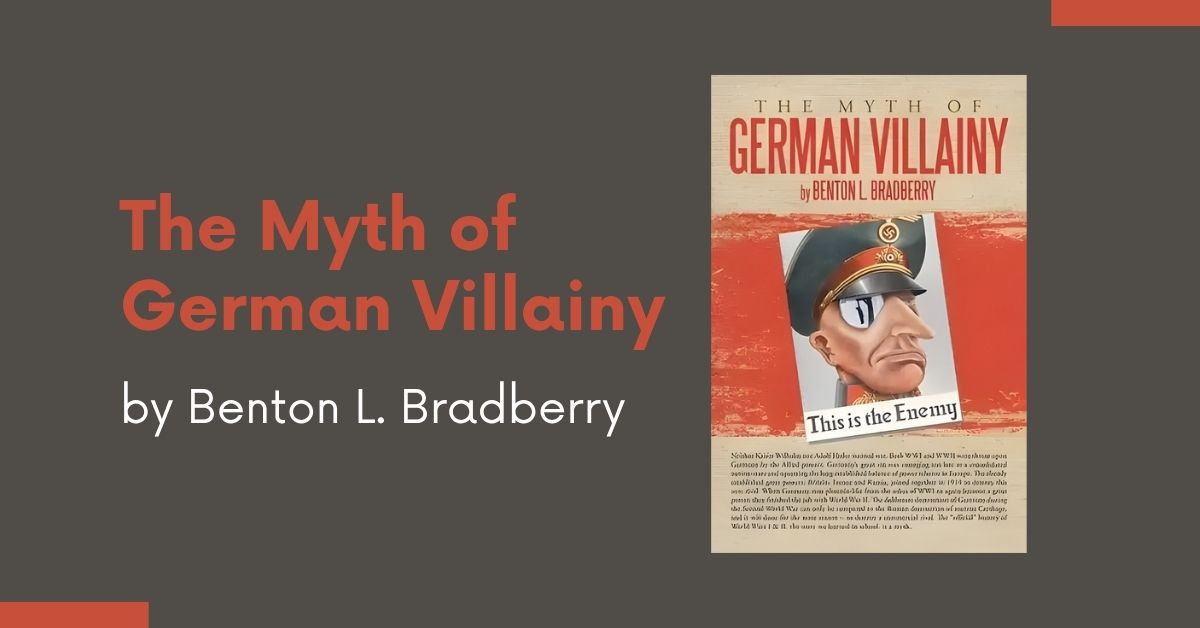
The Myth of German Villainy by Benton L. Bradberry
Author: Benton L. BradberryGenre: Non-Fiction Pages: 404Year: 2012Categories:History Military Non-fiction Tags:Belgium 1914 Historical Analysis Historical Study Military History Nonfiction Political History Propaganda Revisionist History War Crimes Debate Western Front World War I SummaryThe Myth of German Villainy argues that widely accepted narratives portraying Germany as uniquely responsible for atrocities during World War I are exaggerated or misleading. The book reexamines wartime events and propaganda, presenting an alternative interpretation that challenges mainstream historical accounts of German conduct during the conflict.Read Extended AbstractThe Myth of German Villainy by Benton L. Bradberry is a revisionist historical work that reexamines widely accepted accounts of German conduct during World War I, particularly allegations of systematic atrocities committed by German forces in Belgium and France. The author challenges the dominant narrative that portrays Germany as uniquely responsible for widespread wartime brutality, arguing that many of these claims were shaped or amplified by Allied propaganda efforts during and after the war. Drawing on historical documents, military records, and contemporary reports, Bradberry seeks to reassess key incidents and question the reliability of sources used to establish the traditional view. The book places these events within the broader context of wartime conditions, including fear of civilian resistance, communication breakdowns, and the chaos of early 20th-century conflict. It also explores how propaganda influenced public opinion and contributed to long-lasting perceptions of German culpability. As a work of revisionist history, the book presents interpretations that differ from mainstream scholarship and is often discussed in the context of debates over historical methodology, bias, and the evaluation of evidence. It is primarily used for critical analysis and comparative study, encouraging readers to examine how narratives of war are constructed and how historical memory can be shaped by political and cultural forces.Related BooksEugenics by Irving FisherMeditations by Marcus AureliusOn the Latin Language by VarroTrotsky and The Jews Behind the Russian Revolution by a Former Russian Commisar
The Art of Rhetoric by Aristotle
Author: AristotleGenre: Non-Fiction Pages: 563Year: 1947Categories:Non-fiction Philosophy Politics & Current Affairs Tags:Academic Argumentation Audience Analysis Classical Literature Communication Studies Ethos Legal Theory Logos Nonfiction Pathos Persuasion Philosophy Political Theory Public Speaking Rhetoric SummaryThe Art of Rhetoric is Aristotle’s comprehensive treatise on the principles and techniques of persuasive speech. It examines the three modes of persuasion—ethos, pathos, and logos—as well as strategies for constructing arguments, analyzing audiences, and effectively communicating in political, legal, and social contexts.Read Extended AbstractThe Art of Rhetoric by Aristotle is a foundational work on the theory and practice of persuasive communication, written in the 4th century BCE. The text systematically examines how speakers can influence audiences through ethos (credibility), pathos (emotional appeal), and logos (logical argument), offering a detailed framework for analyzing and constructing effective rhetoric. Aristotle explores the types of rhetorical situations—including deliberative, judicial, and epideictic contexts—and the techniques appropriate for each, such as stylistic choices, organizational structure, and methods of amplification and refutation. The work also addresses the importance of audience perception, character, and emotion, emphasizing that persuasion is not merely about the content of speech but also its delivery and contextual suitability. The Art of Rhetoric has profoundly influenced Western education, political discourse, and communication theory, providing enduring insights into argumentation, public speaking, and the ethical use of persuasion across multiple domains, from law and politics to literature and philosophy.Related BooksEugenics by Irving FisherMeditations by Marcus AureliusOn the Latin Language by VarroTrotsky and The Jews Behind the Russian Revolution by a Former Russian Commisar
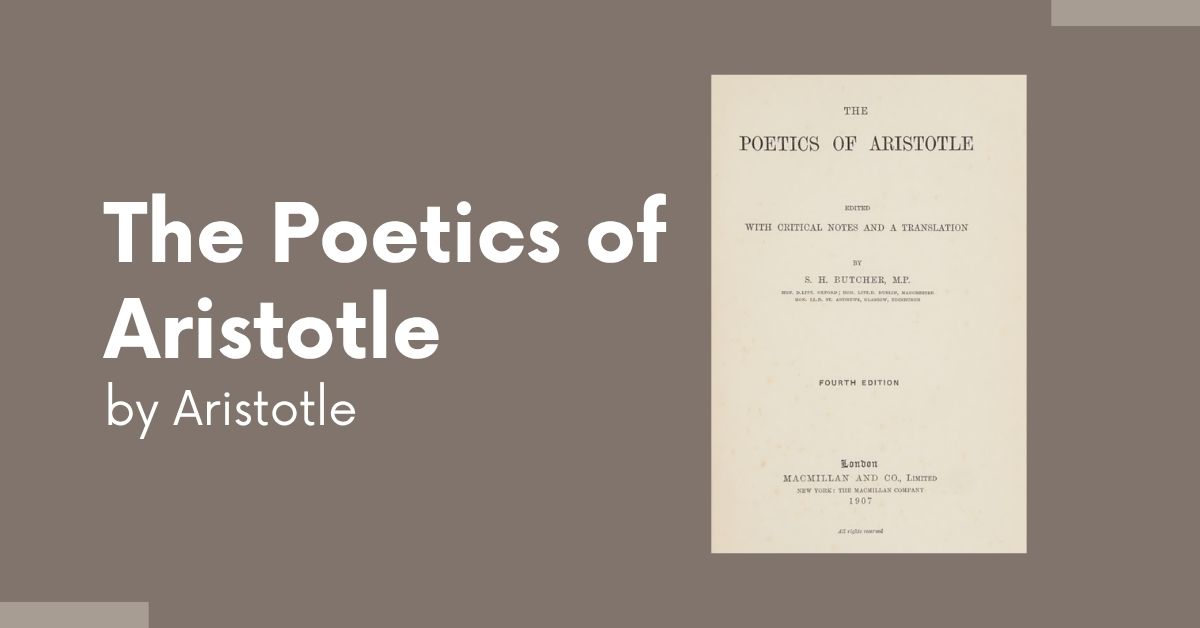
The Poetics of Aristotle by Aristotle
Author: AristotleGenre: Non-Fiction Pages: 148Year: 1907Categories:Drama Essays & Commentary Non-fiction Philosophy Tags:Academic Catharsis Character Classical Literature Drama Epic Poetry Literary Criticism Literary Theory Mimesis Nonfiction Philosophy Plot Theater Studies Tragedy SummaryThe Poetics is Aristotle’s foundational work on literary theory and aesthetics, analyzing the principles of tragedy, epic poetry, and other forms of artistic expression. It examines key elements such as plot, character, and catharsis, offering a systematic framework for understanding the structure and emotional impact of narrative art.Read Extended AbstractThe Poetics by Aristotle is a seminal work of literary theory and criticism that explores the nature, structure, and purpose of poetry and dramatic art. Primarily focused on tragedy, Aristotle examines the components that make a work effective, including plot, character, thought, diction, melody, and spectacle. He introduces the concept of catharsis, describing the emotional effect of tragedy on the audience, and emphasizes the importance of coherent, unified plots over episodic or disjointed narratives. In addition to tragedy, Aristotle addresses epic poetry, comedy, and other narrative forms, comparing their structures, styles, and functions. The work provides systematic criteria for evaluating literary quality, exploring how imitation (mimesis) of action and life can evoke pleasure and understanding in the audience. As one of the earliest comprehensive treatises on aesthetics and dramatic theory, The Poetics has profoundly influenced Western literature, theater, and criticism, serving as a foundational text for both classical and modern studies of narrative, drama, and poetic expression.Related BooksEugenics by Irving FisherMeditations by Marcus AureliusOn the Latin Language by VarroTrotsky and The Jews Behind the Russian Revolution by a Former Russian Commisar
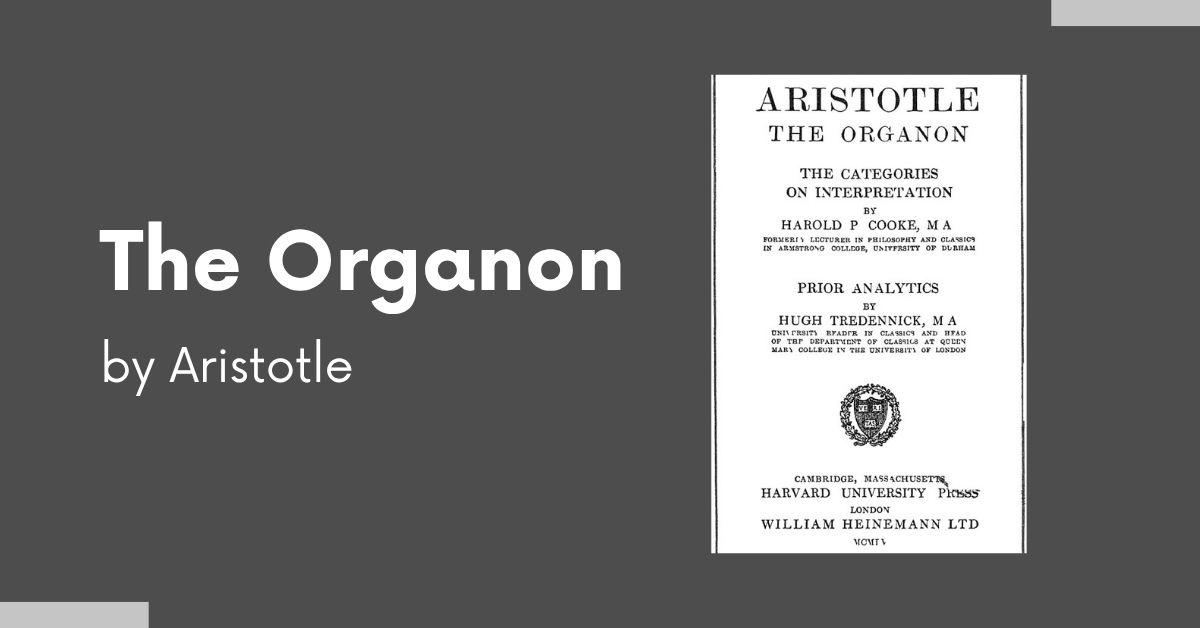
The Organon by Aristotle
Author: AristotleGenre: Non-Fiction Pages: 551Year: 1954Categories:Non-fiction Philosophy Tags:Academic Analytical Philosophy Ancient Greece Argumentation Classical Literature Critical Thinking Deductive Reasoning Logic Methodology Nonfiction Philosophy Syllogisms SummaryThe Organon is a collection of Aristotle’s six works on logic, including Categories, On Interpretation, Prior Analytics, Posterior Analytics, Topics, and Sophistical Refutations. It provides the foundational principles of deductive reasoning, argumentation, and logical analysis, forming the basis of classical and medieval logic studies.Read Extended AbstractThe Organon is a collection of six works by Aristotle that systematically explore the principles and methods of logic. The volumes include Categories, On Interpretation, Prior Analytics, Posterior Analytics, Topics, and Sophistical Refutations, each addressing different aspects of reasoning, argumentation, and the structure of knowledge. Aristotle develops formal tools for deductive reasoning, the classification of propositions, and the evaluation of valid and fallacious arguments, laying the groundwork for centuries of philosophical and scientific inquiry. The work examines how humans can distinguish true from false statements, construct valid syllogisms, and apply rules of logic to practical and theoretical problems. Aristotle also introduces concepts such as predication, contradiction, and the forms of argument, which are essential for understanding deductive and inductive reasoning. The Organon was central to the development of medieval scholasticism and remains influential in modern logic, philosophy, and analytical thought, providing a rigorous framework for critical reasoning and systematic inquiry.Related BooksEugenics by Irving FisherMeditations by Marcus AureliusOn the Latin Language by VarroTrotsky and The Jews Behind the Russian Revolution by a Former Russian Commisar