

Eugenics by Irving Fisher
Author: Irving Fisher Genre: Non-Fiction Pages: 27Categories:History Non-fiction Science & Technology Social Science Tags:Early 20th Century economic thought eugenics heredity historical document History of Science Intellectual History Irving Fisher population theory Primary Source public policy social science SummaryEugenics by Irving Fisher examines the application of heredity-based theories to questions of population, health, and social organization in the early 20th century. The text presents arguments linking biological inheritance to social outcomes within the context of contemporary scientific and economic thought.Read Extended AbstractIn Eugenics, Irving Fisher outlines a framework for understanding human populations through the lens of heredity, drawing on early developments in genetics, statistics, and public health. The work reflects a period in which scholars and policymakers explored the relationship between biological inheritance and social conditions, often treating population characteristics as measurable and subject to analysis. Fisher discusses the role of hereditary traits in shaping individual and collective outcomes, situating these ideas within broader concerns about health, efficiency, and social structure. The text engages with contemporary debates about population trends, the transmission of traits across generations, and the potential role of policy in influencing demographic patterns. Written in the context of early 20th-century social science, the work illustrates how hereditarian perspectives were incorporated into discussions of economics and public policy. It is now primarily read as a historical document that reflects the assumptions, methodologies, and intellectual frameworks of its time.Related BooksMeditations by Marcus AureliusOn the Latin Language by VarroTrotsky and The Jews Behind the Russian Revolution by a Former Russian CommisarThe Devil’s Chessboard by David Talbot
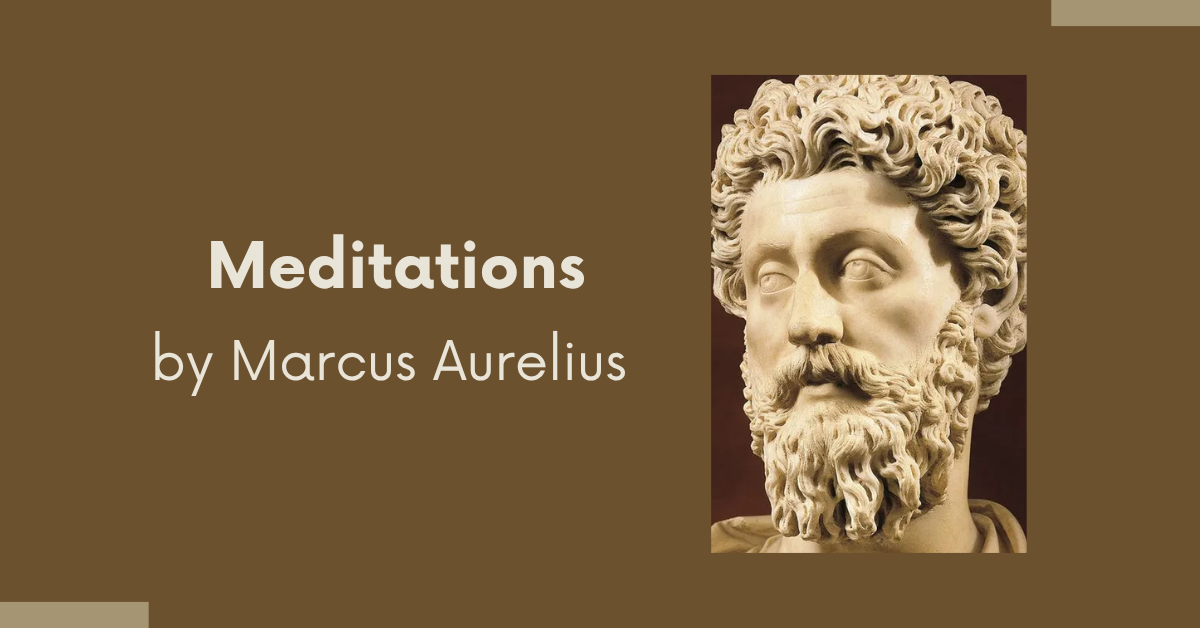
Meditations by Marcus Aurelius
Author: Marcus Aurelius Genre: Non-Fiction Pages: 234Categories:Non-fiction Philosophy Self-Improvement Tags:2nd century AD ancient philosophy Ethics impermanence Marcus Aurelius Meditations resilience Roman Empire self-discipline Stoicism Virtue SummaryMeditations by Marcus Aurelius is a collection of personal reflections written in the 2nd century AD. Rooted in Stoicism, the work explores self-discipline, ethical conduct, and how to live in accordance with reason and the natural order.Read Extended AbstractMeditations is a series of private philosophical writings composed by Marcus Aurelius during his reign as Roman emperor (AD 161–180). Written in Greek and not intended for publication, the text consists of short, introspective entries focused on personal conduct, duty, and the nature of existence. It is one of the most important surviving works associated with Stoicism. The central concern of the work is the cultivation of rational self-control. Marcus emphasizes aligning one’s thoughts and actions with reason, maintaining discipline over emotional responses, and fulfilling one’s role within society. He frequently reflects on the brevity of life and the transient nature of external things, encouraging indifference toward wealth, reputation, and pleasure in favor of virtue. A key theme is the acceptance of a rational and ordered universe. Marcus presents the world as governed by a natural structure in which events unfold according to necessity. From this perspective, individuals should focus only on what lies within their control—namely, their judgments and actions—while accepting external circumstances without resistance. The structure of the text reflects its purpose as a tool for self-examination. Rather than presenting a systematic philosophical argument, Meditations consists of reminders, critiques, and reaffirmations of Stoic principles. This gives the work a fragmented and repetitive quality, consistent with its role as a personal guide for ethical living. In modern scholarship, Meditations is studied both as a philosophical text and as a historical document from the Roman Empire in the 2nd century AD. Its influence endures due to its practical ethical focus, its articulation of Stoic ideas, and its insight into the mindset of a ruler applying philosophy to daily life.Related BooksEugenics by Irving FisherOn the Latin Language by VarroTrotsky and The Jews Behind the Russian Revolution by a Former Russian CommisarThe Devil’s Chessboard by David Talbot
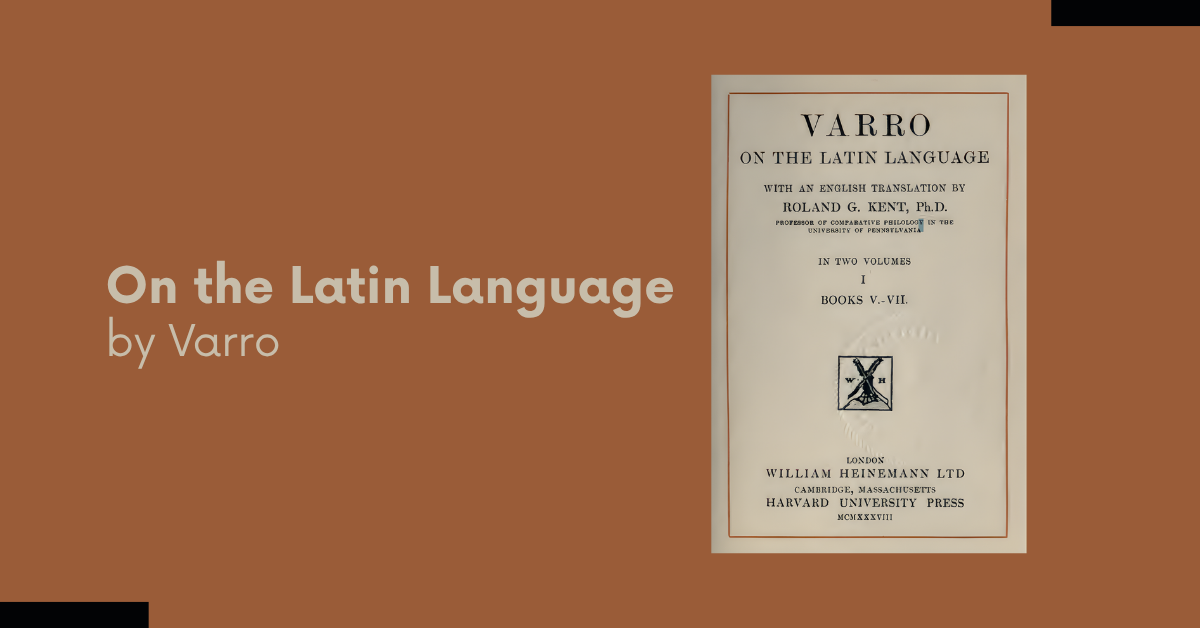
On the Latin Language by Varro
Author: Marcus Terentius VarroGenre: Non-Fiction Pages: 436Year: 1938Categories:Linguistics Non-fiction Philosophy Tags:analogy vs anomaly Ancient Rome classical texts etymology grammar language theory Latin language linguistic history Marcus Terentius Varro philology Roman linguistics Roman Republic SummaryDe Lingua Latina by Marcus Terentius Varro is a foundational study of the Latin. It explores the origins, structure, and usage of Latin words, combining etymology, grammar, and observations on linguistic change in an attempt to systematically explain how the language functions.Read Extended AbstractDe Lingua Latina (“On the Latin Language”) is a scholarly treatise that seeks to analyze and organize the Latin language through a combination of etymological inquiry, grammatical classification, and philosophical reflection. Written by Marcus Terentius Varro in the 1st century BC, the work originally comprised 25 books, though only portions survive today. Varro’s project is both descriptive and analytical. He investigates the origins of words, often attempting to trace them back to earlier forms or meanings, reflecting an early effort at systematic etymology. At the same time, he categorizes elements of grammar—such as nouns, verbs, and inflections—seeking patterns that govern how Latin operates. His approach blends observation with speculative reasoning, illustrating the state of linguistic thought in the Roman world. A central theme in the work is the tension between analogy (regular patterns in language) and anomaly (irregular or exceptional forms). Varro engages with this debate by examining whether language follows consistent rules or evolves through irregular usage. His discussion reflects broader intellectual currents of the time, particularly influences from Greek grammatical theory. The treatise also provides insight into Roman culture and thought, as many examples are drawn from religion, law, and daily life in the Roman Republic. As such, it serves not only as a linguistic study but also as a cultural document preserving archaic forms and interpretations of Latin. In modern scholarship, De Lingua Latina is valued as one of the earliest extensive works on Latin linguistics. Although some of Varro’s etymologies are no longer accepted, the work remains important for understanding ancient approaches to language analysis and the intellectual history of grammar and philology.Related BooksEugenics by Irving FisherMeditations by Marcus AureliusTrotsky and The Jews Behind the Russian Revolution by a Former Russian CommisarThe Devil’s Chessboard by David Talbot
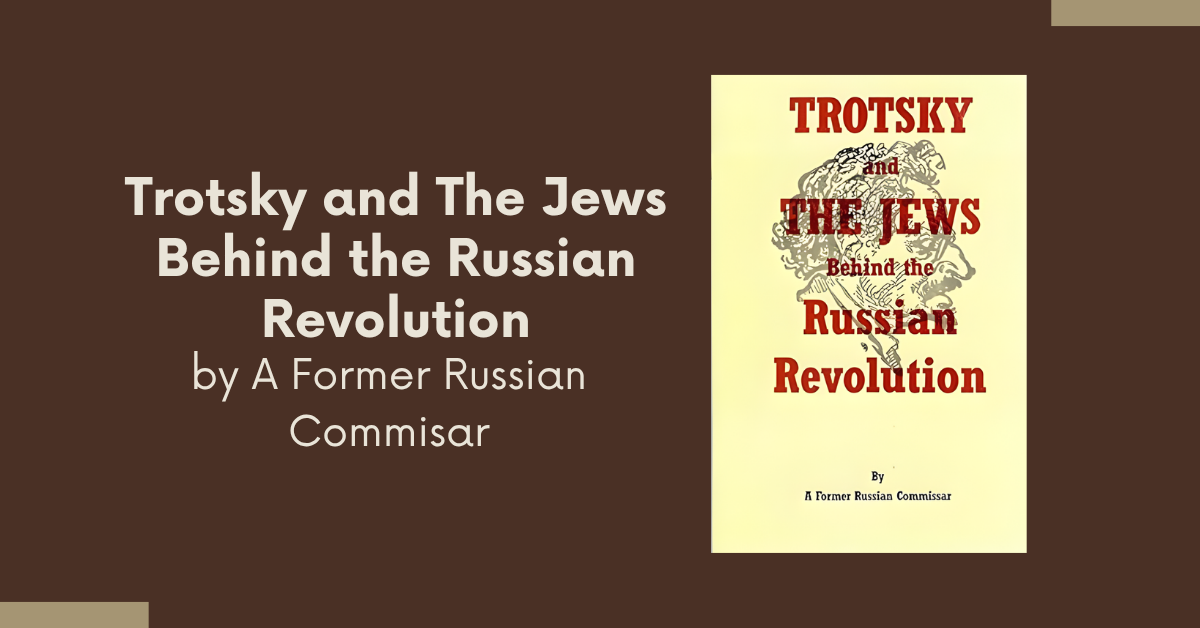
Trotsky and The Jews Behind the Russian Revolution by a Former Russian Commisar
Author: A Former Russian CommisarGenre: Non-Fiction Pages: 51Categories:Essays & Commentary History Non-fiction Politics & Current Affairs Tags:Bolshevik Party Bolshevik Revolution Early 20th Century leadership analysis Leon Trotsky political conflict Political Ideology Political Theory propaganda studies revolutionary figures Revolutionary Movements Russian Empire Russian Revolution SummaryTrotsky and the Jews Behind the Russian Revolution is a political pamphlet attributed to “A Former Russian Commissar” that interprets the Russian Revolution through the actions of Leon Trotsky and other Jewish participants in the Bolshevik movement. The text emphasizes their roles and presents the revolution as significantly shaped by their influence.Read Extended AbstractThis pamphlet presents an interpretation of the Russian Revolution that focuses on the participation of Leon Trotsky and other individuals identified as Jewish within the revolutionary movement. The author attributes a high degree of influence to these figures in the development and success of the Bolshevik cause, framing their involvement as a central explanatory factor in the transformation of the Russian Empire. The work is structured around references to political actors, organizational roles, and revolutionary events, often highlighting biographical details and affiliations. It uses examples of individuals within the Bolshevik Party and related institutions to build an argument about patterns of influence and leadership during the revolutionary period. The pamphlet’s explanatory approach differs from broader historical interpretations that situate the Bolshevik Revolution within a wider context of social unrest, wartime pressures, and institutional collapse. Instead, it narrows its focus to the roles and identities of specific participants as a primary lens for understanding events.Related BooksEugenics by Irving FisherMeditations by Marcus AureliusOn the Latin Language by VarroThe Devil’s Chessboard by David Talbot

Anna Karenina by Leo Tolstoy
Author: Leo TolstoyGenre: Fiction Pages: 1023Categories:Fiction Historical Fiction Romance Tags:19th Century Anna Karenina Aristocracy Character Study Classic Novel Infidelity Leo Tolstoy Marriage Philosophy Realism Romance Rural Life Russian Literature Society Tragedy SummaryAnna Karenina follows the tragic story of Anna, a married aristocrat who enters a passionate affair that leads to personal and social downfall. Alongside her story, the novel explores the life of Konstantin Levin, whose search for meaning and fulfillment contrasts with Anna’s fate.Read Extended AbstractAnna Karenina by Leo Tolstoy is a landmark work of Russian literature that intertwines multiple narratives to explore themes of love, fidelity, family, and society. The central plot follows Anna’s relationship with Count Vronsky, depicting the emotional intensity of their affair and the consequences it brings within the rigid social structures of imperial Russian aristocracy. Parallel to Anna’s story is the journey of Konstantin Levin, whose reflections on work, faith, and rural life offer a philosophical counterpoint. Through richly developed characters and detailed social settings, Tolstoy examines the moral dilemmas and inner conflicts faced by individuals navigating love, duty, and societal expectations. The novel also provides a broad portrait of 19th-century Russian life, addressing issues such as marriage, gender roles, class divisions, and the search for personal meaning. Widely regarded as one of the greatest novels ever written, Anna Karenina combines psychological depth with social realism.Related BooksThe Clouds by AristophanesAesop’s Fables by AesopSeven Against Thebes by AeschylusThe Great Gatsby by F. Scott Fitzgerald

The Devil’s Chessboard by David Talbot
Author: David TalbotGenre: Non-Fiction Pages: 871Categories:History Non-fiction Politics & Current Affairs Tags:Allen Dulles Biography Central Intelligence Agency CIA Cold War Covert Operations David Talbot Espionage Government Intelligence Investigative Journalism Political Power Secret Operations The Devil’s Chessboard U.S. Foreign Policy SummaryThe Devil’s Chessboard examines the career of Allen Dulles, focusing on his role in shaping the early Central Intelligence Agency and U.S. foreign policy during the Cold War. The book argues that Dulles and his network wielded significant influence over covert operations, international affairs, and domestic politics.Read Extended AbstractThe Devil’s Chessboard by David Talbot is a historical and investigative work that explores the life and influence of Allen Dulles, one of the longest-serving directors of the Central Intelligence Agency. The book traces Dulles’s career from his early involvement in diplomacy and intelligence to his leadership of the CIA during key moments of the Cold War. Talbot examines major covert operations, including coups, espionage activities, and intelligence strategies, analyzing their impact on global politics and U.S. foreign policy. The work also explores the relationships between intelligence agencies, political elites, and corporate interests, presenting a narrative about the concentration of power and the use of secrecy in governance. While drawing on historical records, interviews, and investigative research, the book engages with ongoing debates about transparency, accountability, and the role of intelligence agencies in democratic societies.Related BooksEugenics by Irving FisherMeditations by Marcus AureliusOn the Latin Language by VarroTrotsky and The Jews Behind the Russian Revolution by a Former Russian Commisar