
Categories:
Non-fiction PhilosophySummary
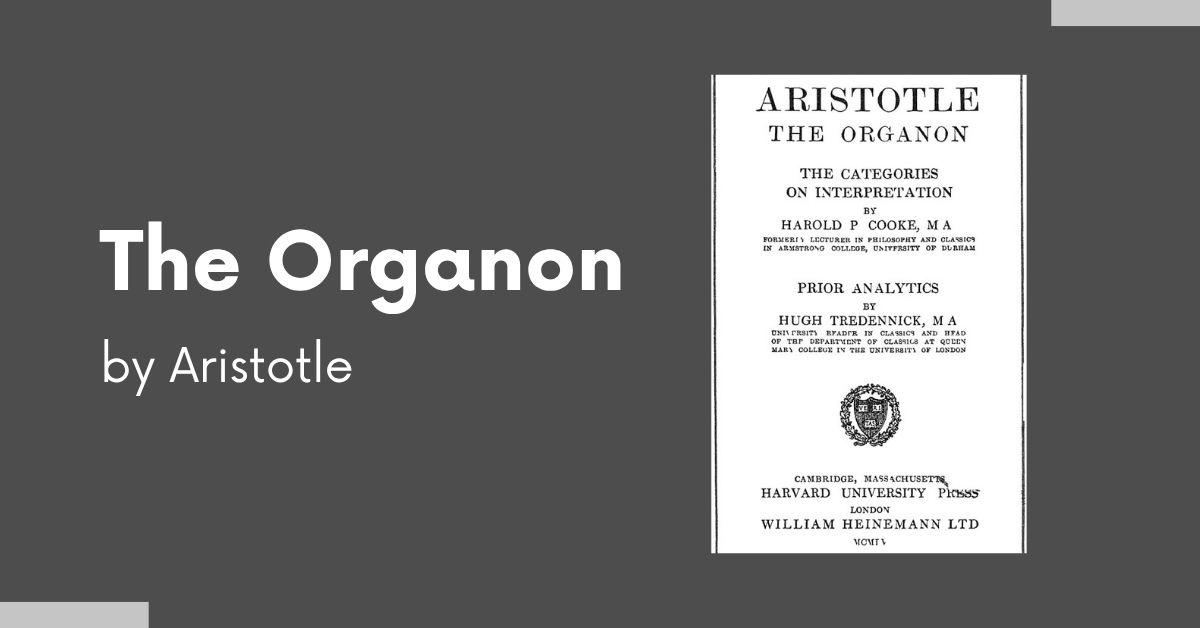
The Organon is a collection of Aristotle’s six works on logic, including Categories, On Interpretation, Prior Analytics, Posterior Analytics, Topics, and Sophistical Refutations. It provides the foundational principles of deductive reasoning, argumentation, and logical analysis, forming the basis of classical and medieval logic studies.
Read Extended Abstract
The Organon is a collection of six works by Aristotle that systematically explore the principles and methods of logic. The volumes include Categories, On Interpretation, Prior Analytics, Posterior Analytics, Topics, and Sophistical Refutations, each addressing different aspects of reasoning, argumentation, and the structure of knowledge. Aristotle develops formal tools for deductive reasoning, the classification of propositions, and the evaluation of valid and fallacious arguments, laying the groundwork for centuries of philosophical and scientific inquiry. The work examines how humans can distinguish true from false statements, construct valid syllogisms, and apply rules of logic to practical and theoretical problems. Aristotle also introduces concepts such as predication, contradiction, and the forms of argument, which are essential for understanding deductive and inductive reasoning. The Organon was central to the development of medieval scholasticism and remains influential in modern logic, philosophy, and analytical thought, providing a rigorous framework for critical reasoning and systematic inquiry.