

The United States and Britain in Prophecy by Herbert W. Armstrong
Author: Herbert W. ArmstrongGenre: Non-Fiction Pages: 251Year: 1980Categories:History Non-fiction Religion Tags:Biblical Prophecy Britain Christian Theology Christianity Cultural Studies Divine Guidance Herbert W. Armstrong National Destiny Nonfiction Prophetic Interpretation Religious History Scripture Interpretation Sociopolitical Analysis Theology United States SummaryThe United States and Britain in Prophecy examines Herbert W. Armstrong’s interpretation of biblical prophecy concerning the modern nations of the U.S. and Britain. The book argues that scriptural texts provide insight into the historical development, destiny, and spiritual significance of these nations.Read Extended AbstractThe United States and Britain in Prophecy by Herbert W. Armstrong explores the biblical foundations and prophetic significance of the United States and Great Britain. Armstrong interprets passages from the Old and New Testaments, linking them to historical events, cultural developments, and the perceived destiny of these nations in God’s plan. The work emphasizes themes such as divine guidance, national identity, and moral responsibility, framing contemporary political and social conditions in light of biblical prophecy. Armstrong also addresses the implications of prophecy for understanding international relations, leadership, and the spiritual direction of societies. While written from a specific religious perspective, the book has been influential in Armstrong’s theological movement and in the study of prophetic interpretation within modern Christian contexts.Related BooksEugenics by Irving FisherMeditations by Marcus AureliusOn the Latin Language by VarroTrotsky and The Jews Behind the Russian Revolution by a Former Russian Commisar
Third Zionist War George W. Armstrong
Author: George W. ArmstrongGenre: Non-Fiction Pages: 69Year: 1951Categories:History Military Non-fiction Politics & Current Affairs Tags:Alternative History Diplomacy Geopolitics George W. Armstrong Global Politics Historical Conflict International Relations Investigative Literature Israel Middle East Military Strategy Nonfiction Political Analysis Sociopolitical Study Third Zionist War SummaryThird Zionist War examines Armstrong’s perspective on geopolitical conflicts involving Israel and the Middle East. The book presents his analysis of historical events, political strategies, and international interactions that he argues contribute to ongoing tensions in the region.Read Extended AbstractThird Zionist War by George W. Armstrong explores the geopolitical dynamics of the Middle East, focusing on Israel and its relationships with surrounding nations and global powers. The book discusses historical conflicts, political strategies, and international diplomacy, offering Armstrong’s interpretation of the forces shaping regional and global events. Armstrong presents a narrative that analyzes military, economic, and political factors, emphasizing his perspective on power, influence, and strategic decision-making. While written from a specific viewpoint, the work is often referenced in discussions of alternative historical narratives, geopolitical analysis, and the examination of mid-to-late 20th-century Middle Eastern affairs. The text seeks to provide a framework for understanding Armstrong’s interpretation of international tensions and their perceived causes.Related BooksEugenics by Irving FisherMeditations by Marcus AureliusOn the Latin Language by VarroTrotsky and The Jews Behind the Russian Revolution by a Former Russian Commisar
World Empire by George W. Armstrong
Author: George W. ArmstrongGenre: Non-Fiction Pages: 66Year: 1945Categories:Business & Economics History Non-fiction Politics & Current Affairs Tags:Alternative History Centralized Authority Economic Control Financial Institutions Geopolitics George W. Armstrong Global Politics Governance Historical Analysis International Organizations Investigative Literature Nonfiction Political Power Sociopolitical Study World Empire SummaryWorld Empire examines Armstrong’s perspective on the development and influence of global political and economic power structures. The book explores historical and contemporary factors that he argues contribute to the rise of centralized authority and international control.Read Extended AbstractWorld Empire by George W. Armstrong analyzes the formation and operation of global political, financial, and social systems from a historical and critical perspective. Armstrong discusses the interplay of nation-states, financial institutions, and international organizations in shaping world affairs, focusing on how centralized power structures influence political and economic outcomes. The work explores historical precedents, international diplomacy, and mechanisms of economic and political control, examining patterns that the author claims lead to global consolidation of power. While written from a particular viewpoint, the book is often referenced in studies of alternative historical interpretations, geopolitics, and the analysis of supranational influence over nations. Armstrong emphasizes the relationship between authority, governance, and the social and economic consequences of centralized global structures.Related BooksEugenics by Irving FisherMeditations by Marcus AureliusOn the Latin Language by VarroTrotsky and The Jews Behind the Russian Revolution by a Former Russian Commisar
The Clouds by Aristophanes
Author: AristophanesGenre: Fiction Pages: 35Categories:Fiction History Philosophy Satire Tags:Ancient Athens Aristophanes Chorus Classical Literature Dramatic Literature Education Greek Comedy Humor Intellectual History Morality Philosophy Satire Socratic Critique The Clouds Theater SummaryThe Clouds is a comedic play by Aristophanes that satirizes Athenian philosophers, particularly Socrates, and critiques contemporary intellectual trends. The play humorously explores themes of education, morality, and the conflict between traditional values and new ways of thinking.Read Extended AbstractThe Clouds by Aristophanes is a classical Greek comedy that uses satire to examine the rise of sophistry and philosophical inquiry in Athens during the 5th century BCE. Through the story of Strepsiades, a man burdened by debt, the play critiques the intellectual fashions of the time, highlighting perceived moral decay and the manipulation of logic for personal advantage. Aristophanes contrasts traditional values with the innovative, often morally ambiguous teachings of Socratic philosophy, using humor, parody, and exaggerated characterizations. The play also incorporates chorus elements and witty dialogue to engage the audience in broader reflections on education, ethics, and societal change. The Clouds remains a significant work for understanding ancient Greek comedy, the cultural context of Athens, and early critiques of philosophy and pedagogy.Related BooksAnna Karenina by Leo TolstoyAesop’s Fables by AesopSeven Against Thebes by AeschylusThe Great Gatsby by F. Scott Fitzgerald
America Not Discovered by Columbus by Rasmus B. Anderson
Author: Rasmus B. AndersonGenre: Non-Fiction Pages: 180Year: 1891Categories:Archaeology History Non-fiction Tags:Alternative History America Not Discovered by Columbus Archaeology Asian Mariners Cultural Exchange Early Settlement Early Voyages Historical Evidence Historical Revision History Maritime History Nautical Exploration Norse Exploration Pre-Columbian Exploration Transatlantic Contact SummaryAmerica Not Discovered by Columbus examines historical evidence suggesting that explorers reached the Americas prior to Christopher Columbus. The book explores various theories, archaeological findings, and historical records to reassess traditional narratives of discovery and early transatlantic contact.Read Extended AbstractAmerica Not Discovered by Columbus investigates claims that the Americas were visited by explorers before Columbus’ 1492 voyage. The book reviews historical sources, maritime records, and archaeological evidence to challenge conventional accounts of European discovery. The work discusses potential pre-Columbian contact by Norse explorers, Asian seafarers, and other early travelers, evaluating the credibility of each claim. It also explores the implications of these findings for understanding cultural exchange, settlement patterns, and the historiography of exploration. While aiming to provide an alternative perspective on early exploration, the book situates its arguments within broader discussions of history, archaeology, and the interpretation of evidence.Related BooksEugenics by Irving FisherMeditations by Marcus AureliusOn the Latin Language by VarroTrotsky and The Jews Behind the Russian Revolution by a Former Russian Commisar
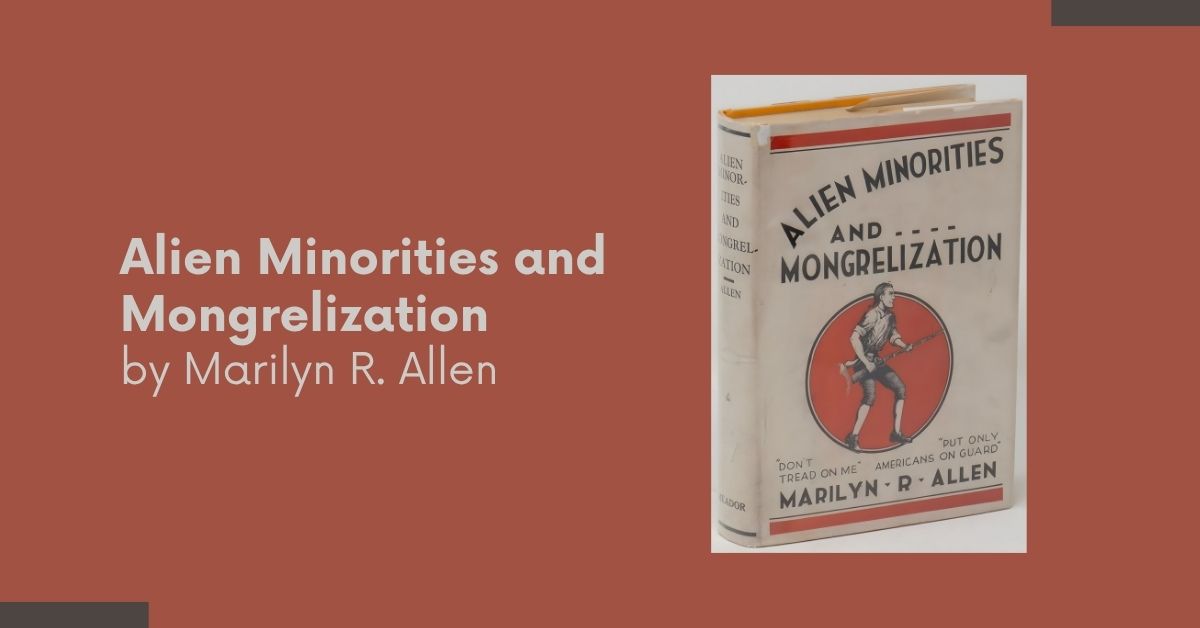
Alien Minorities and Mongrelization by Marilyn R. Allen
Author: Marilyn R. AllenGenre: Non-Fiction Pages: 237Year: 1949Categories:History Non-fiction Politics & Current Affairs Sociology Tags:Alien Minorities and Mongrelization Assimilation Cultural Analysis Cultural Cohesion Extremist Literature Historical Study Immigration Minority Groups National Identity Political Ideology Racial Identity Radical Politics Social Structure Social Theory Sociology SummaryAlien Minorities and Mongrelization examines the author’s perspective on the influence of minority groups on national identity and cultural cohesion. The book argues that intermixing of populations can have social, political, and cultural consequences, presenting a particular viewpoint on preserving distinct group identities.Read Extended AbstractAlien Minorities and Mongrelization explores the effects of demographic change and intergroup mixing on societies, focusing on the perceived impact of minority populations. The work presents the author’s analysis of cultural, political, and social implications of population mixing, emphasizing the maintenance of distinct group identity and cohesion. The text discusses immigration, assimilation, and societal structure, framing these issues within a narrative of cultural preservation and societal stability. The work reflects the debates and anxieties surrounding race, identity, and social organization prevalent at the time of its writing.Related BooksEugenics by Irving FisherMeditations by Marcus AureliusOn the Latin Language by VarroTrotsky and The Jews Behind the Russian Revolution by a Former Russian Commisar