
Categories:
Fiction Historical Fiction SatireSummary
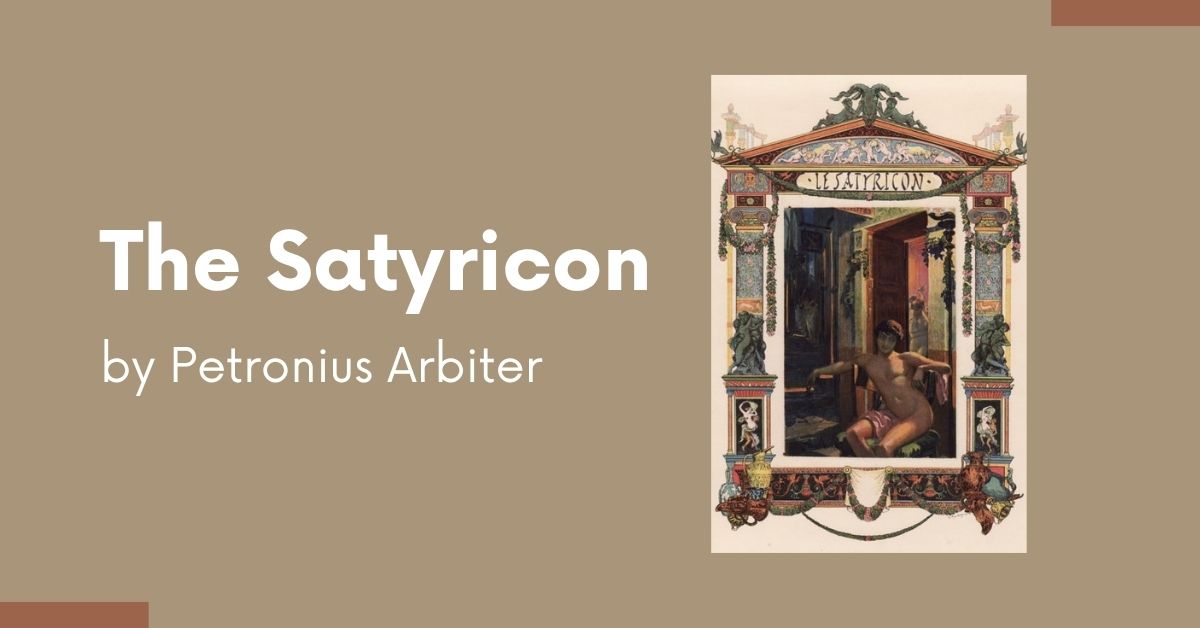
The Satyricon is a Roman satirical novel that follows the adventures of Encolpius, his friend Ascyltus, and the young Giton as they navigate love, desire, and social intrigue in the decadent society of Nero’s Rome. Through episodic and often humorous or bawdy episodes, the work critiques Roman morals, social hierarchies, and human folly.
Read Extended Abstract
The Satyricon, attributed to Petronius Arbiter, is a Latin work of satirical fiction from the 1st century CE that offers a vivid, episodic portrayal of life in the Roman Empire under Nero. The narrative follows Encolpius, his friend Ascyltus, and the boy Giton as they journey through a series of misadventures involving love, lust, theft, and deception. Through these episodes, the novel explores the excesses and moral corruption of Roman society, blending comedy, eroticism, and social critique. The work is notable for its fragmented structure, a combination of prose and poetry, and its satirical tone, which highlights the contrast between social appearances and human behavior. Key episodes, such as the lavish banquet at Trimalchio’s house, provide enduring insights into Roman domestic life, wealth, and the pretensions of the newly rich. Beyond its humor and intrigue, The Satyricon examines themes of power, desire, social ambition, and human folly, offering both entertainment and a critical lens on Roman culture. As one of the earliest surviving examples of the novel form, The Satyricon is valued for its historical, literary, and cultural significance. It provides scholars and readers with a unique window into ancient Roman life while influencing later literature through its innovative narrative techniques, character-driven storytelling, and satirical approach to societal norms.