
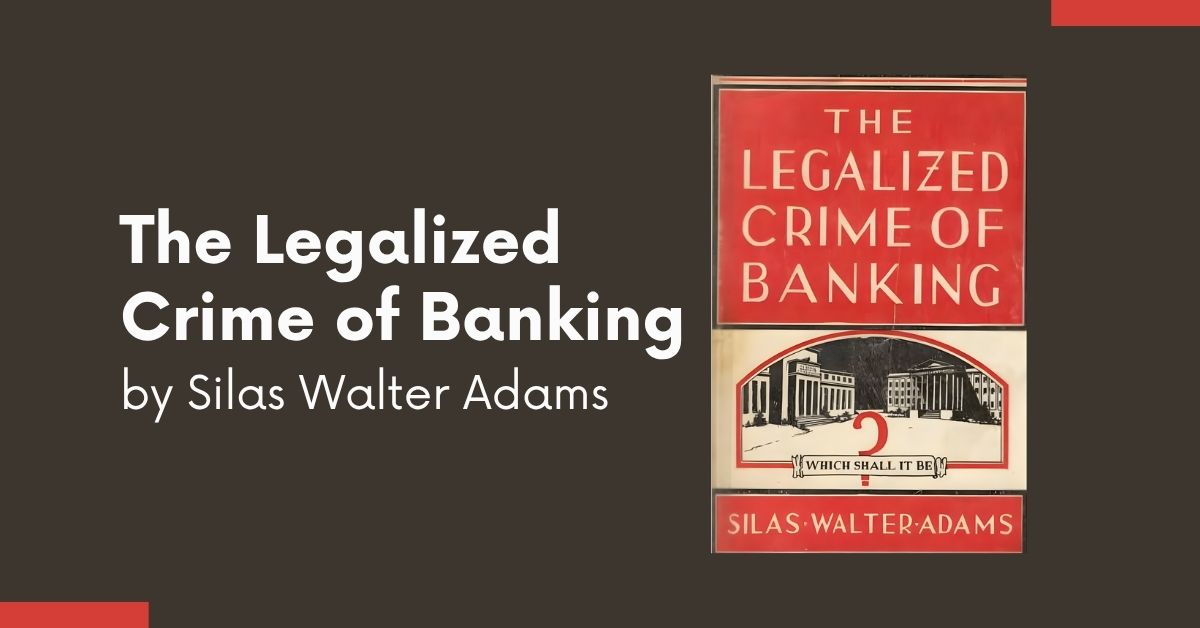
Categories:
Business & Economics History Non-fiction Politics & Current AffairsSummary
The Legalized Crime of Banking examines the structure and operations of modern banking systems, arguing that they enable practices the author considers exploitative and harmful. The book analyzes how banks, through legal frameworks and financial mechanisms, influence economies, government policy, and individual wealth.
Read Extended Abstract
The Legalized Crime of Banking by Silas Walter Adams explores the functioning of banks and the financial system, presenting a critical perspective on the ways in which banking practices can create systemic economic advantages for certain institutions and individuals. The book examines the history, regulations, and mechanisms of banking, including credit creation, interest policies, and the centralization of financial power. Adams discusses the social, political, and economic implications of banking, emphasizing how legal and institutional structures may facilitate practices perceived as exploitative or detrimental to the general public. The work seeks to illuminate the relationship between financial institutions, government oversight, and public welfare, providing a critical analysis of banking from both historical and contemporary perspectives.